In this article
Fynex publishes this list and is one of the options on it.
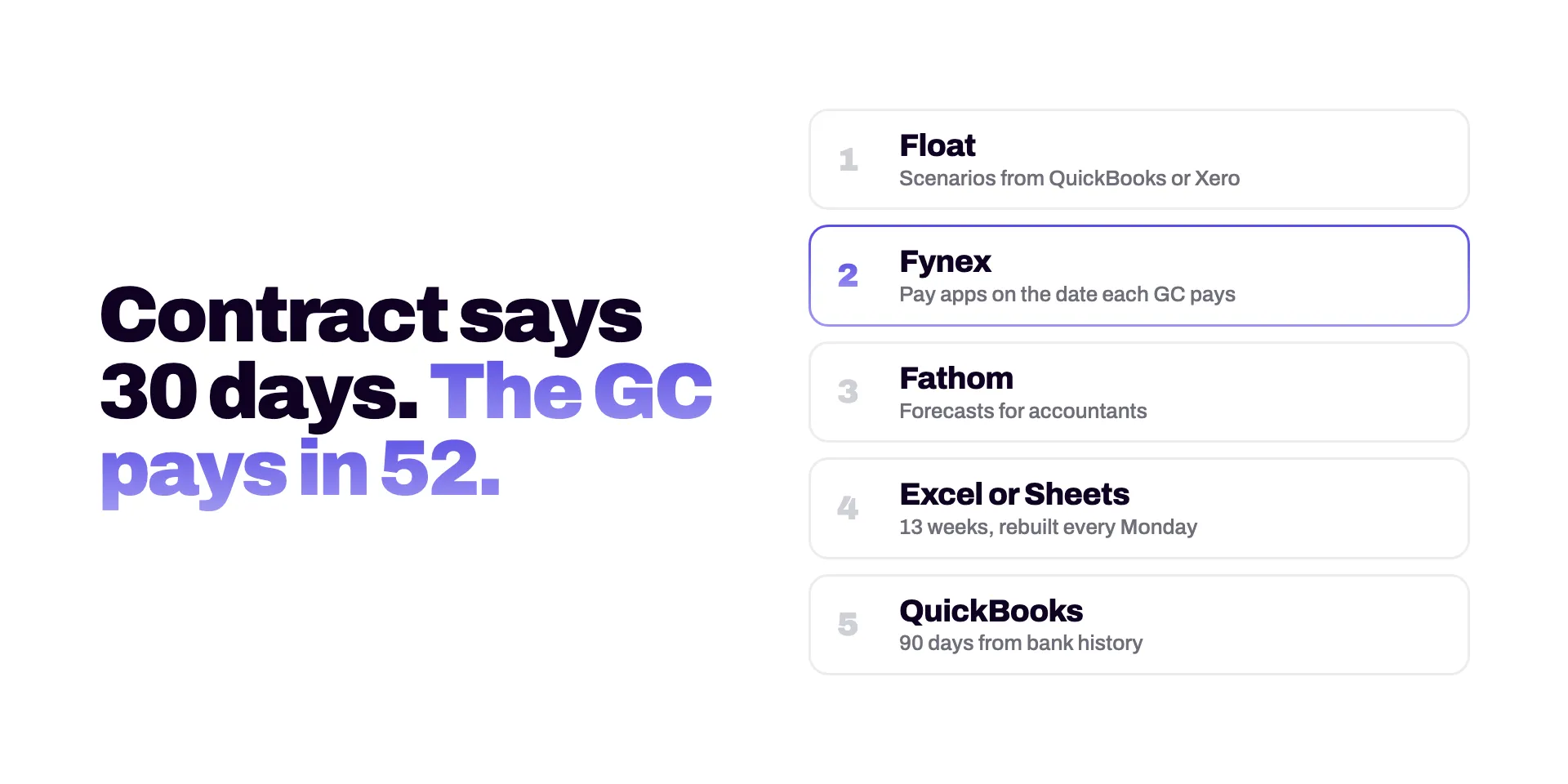
Quick answer: Contractors forecast cash best in a tool that knows when each GC actually pays. Float suits firms on QuickBooks or Xero that want scenarios. Fynex builds the forecast from real bank balances, open pay apps, retainage and scheduled payroll and sub runs. Fathom suits accountants. A spreadsheet suits a few jobs, and QuickBooks’ planner gives a free 90-day view.
How to build a forecast by hand is covered in how much cash will I have in three weeks. This post compares the tools, for contractors specifically. Prices come only from each vendor’s own page, fetched 2026-10-13. No scores, no star ratings.
Why contractor cash flow is harder to forecast
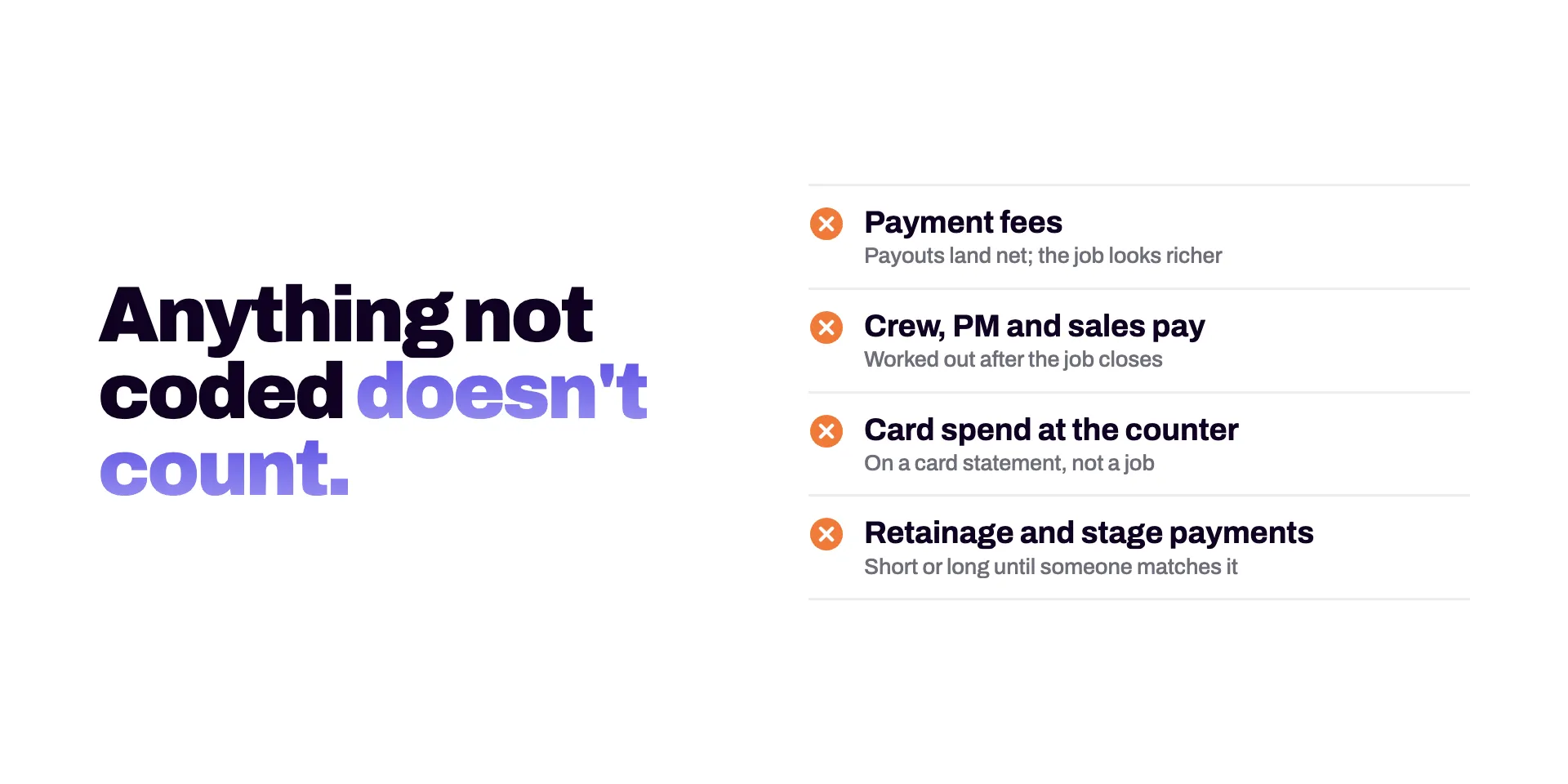
A contractor’s money in arrives in lumps on someone else’s schedule, and the money out leaves every week. A generic forecast tool sees invoices and bills. A contractor’s forecast needs five things it usually cannot see:
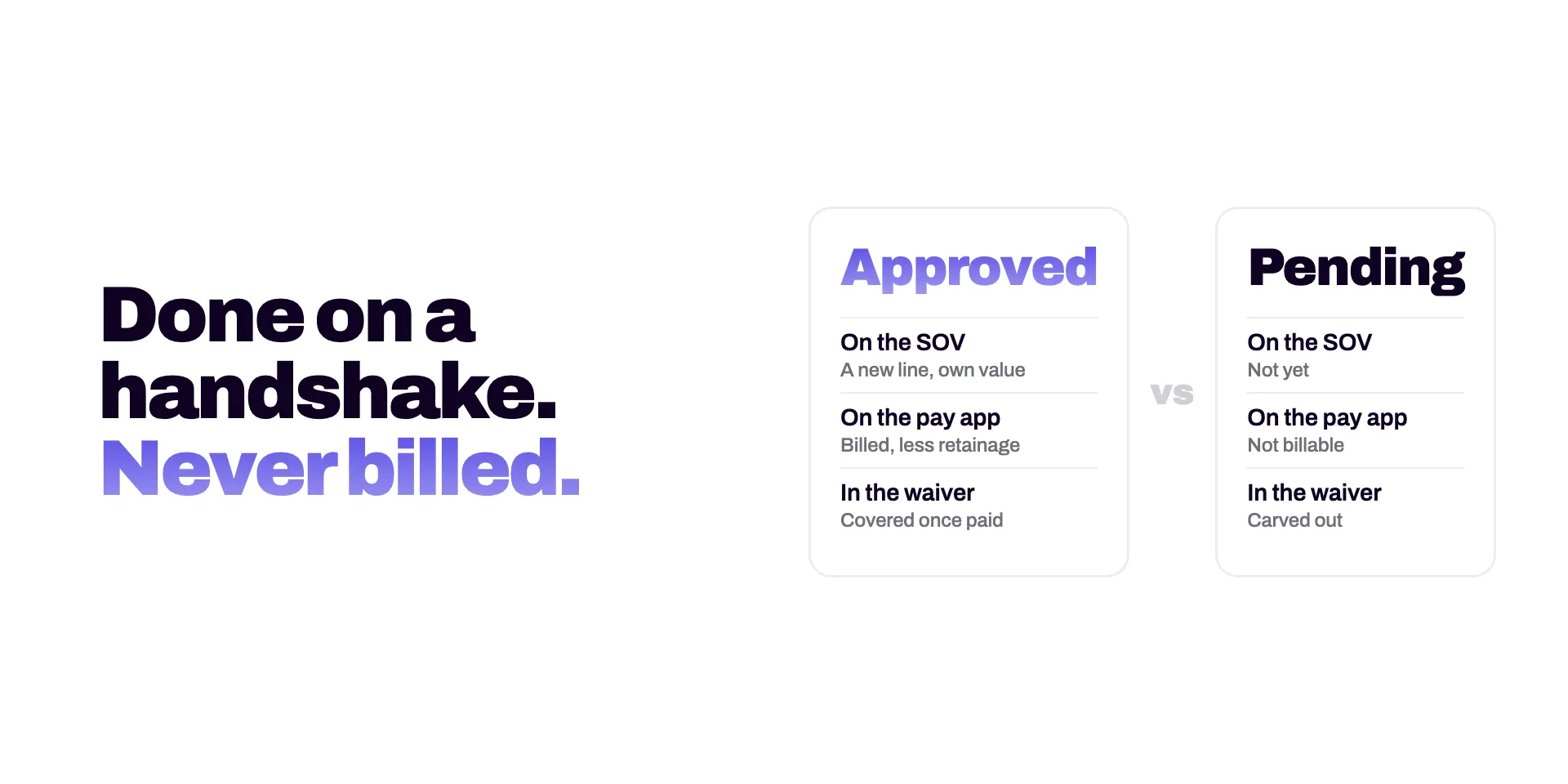
- Pay apps, not invoices. Submitted on the 25th, approved, sometimes marked down, then paid when the GC is paid. The real date is the GC’s habit, not the contract.
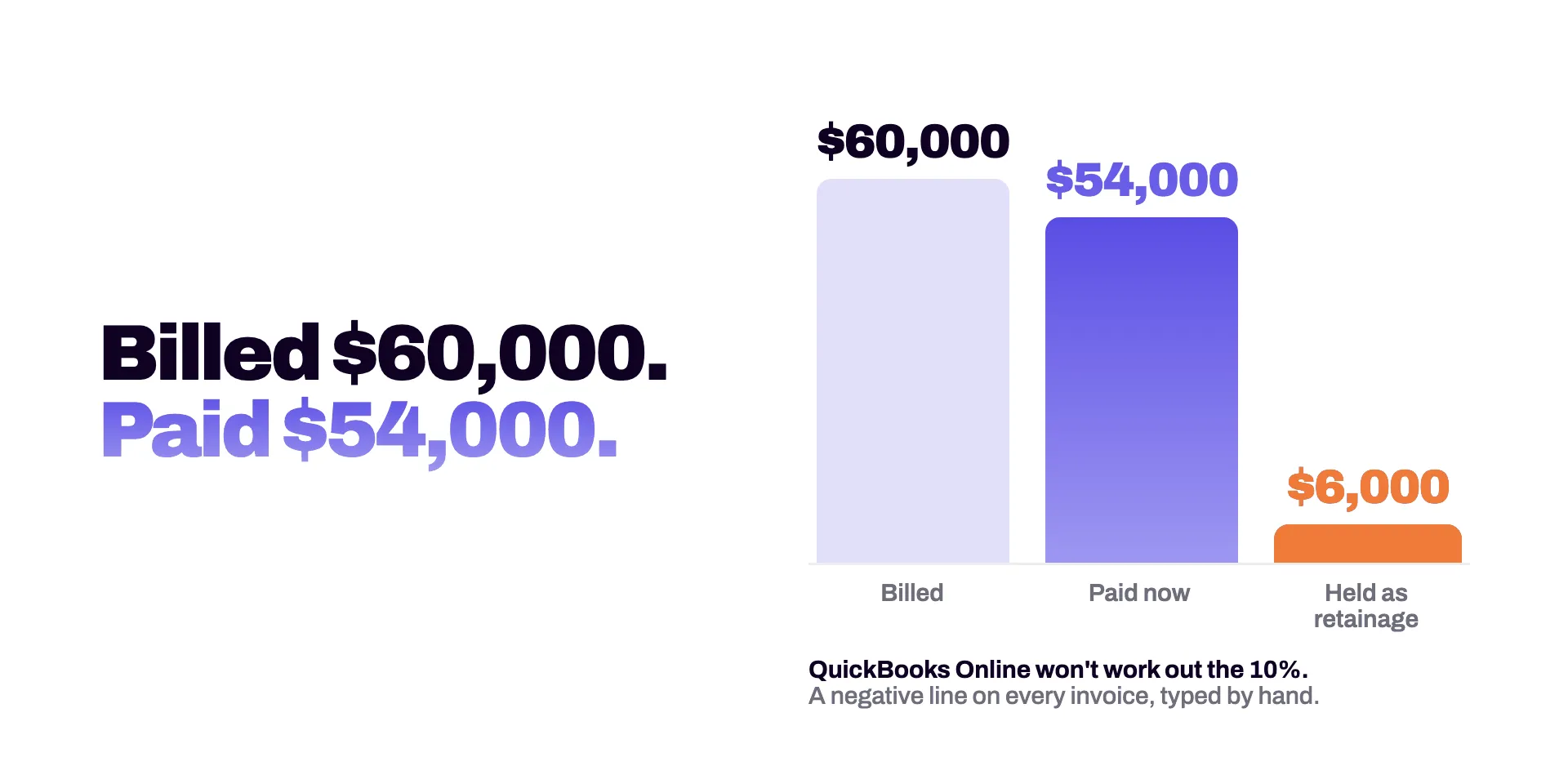
- Retainage. Five or ten percent of every pay app, released months after the work, on a date state law often sets. See retainage law by state.
- Weekly payroll. Crews are paid every Friday, whatever the GC does.
- Subs on pay-when-paid terms. Their payment follows yours, so it moves when yours moves.
- Lumpy tax dates. Quarterly estimates and sales tax in the US; in the UK the CIS payment to HMRC by the 22nd of each month and quarterly VAT.
How we judged them
- Starts from real balances. Every bank account, not last month’s close.
- Knows the dates. Pay apps and retainage on realistic dates; payroll and sub runs on theirs.
- Updates itself. Or someone rebuilds it every Monday.
- Scenarios. What if the GC pays 20 days late, or the next job slips a month?
- Works with your books. QuickBooks, Xero or Sage.
- Published pricing.
Comparison table
List order is not a ranking.
| Tool | Best for | What it is | Where the numbers come from | Construction dates (pay apps, retainage) | Price (vendor page, 2026-10-13) |
|---|---|---|---|---|---|
| Float | Contractors on QuickBooks or Xero who want scenario planning | Cash flow forecasting app | Your accounting system | Entered as forecast items | Essentials $105/month billed annually ($130 monthly) |
| Fynex | Contractors who want the forecast built from the bank and the job, kept current without a Monday rebuild | Money layer beside your project system and books; not a ledger | Every bank account, payments in flight, open pay apps and scheduled payroll and sub runs | Pay apps on each GC’s actual paying pattern; retainage on its release date | Public list at /pricing/ |
| Fathom | Accountants forecasting for contractor clients | Reporting and forecasting tool | QuickBooks, Xero, MYOB or Excel | Built into the forecast assumptions | Priced by number of companies connected |
| Excel or Google Sheets | A few jobs and an owner who likes a spreadsheet | Spreadsheet | Typed in | Whatever you build | Free with your office suite |
| QuickBooks Online Cash Flow Planner | A free first look for QuickBooks users | Built-in planner | History of bank accounts connected to QuickBooks | Not modelled | Included with QuickBooks Online |
The tools
1. Float
Best for: contractors on QuickBooks or Xero with someone who will own the forecast and run scenarios.
Float’s pricing page lists Essentials at $105 a month billed annually ($130 monthly), Growth at $215 ($265) and Scale, for multiple entities, at $315 ($389), excluding tax. It integrates with QuickBooks and Xero and builds the forecast from them. Watch: Float reads what is in the books. Pay apps not yet approved, retainage and the GC’s real paying pattern go in as manual forecast items, so the forecast is as current as the last person who updated it.
2. Fynex
Best for: contractors whose forecast is a spreadsheet rebuilt every Monday from the bank, the pay app log and the payroll calendar.
Fynex runs beside Procore, Buildertrend or Knowify and beside QuickBooks, Xero or Sage. It is not a ledger and not a project system. The Cash view holds every bank account and payment in flight in one position, then projects up to 90 days forward from movements it can point to: open pay apps on the date each GC actually pays, retainage on its release date, and the payroll, sub and supplier runs already scheduled. It flags the week the balance heads below your floor. Because Fynex also runs the sub payments and matches every payment to the job, the forecast moves when the money does. Customer funds are held by Fondy Ltd (FCA FRN 900705). Watch: it does not do long-range budgeting or a three-statement model; that is Fathom’s or your accountant’s job.
3. Fathom
Best for: accountants and advisers who forecast for several contractor clients.
Fathom’s pricing is set by the number of companies you connect; its page shows Pro Gold at $450 a month for 25 companies, and a calculator for smaller counts. It offers three-way cash flow forecasting (profit and loss, balance sheet and cash together), scenarios, and integrations with QuickBooks, Xero, MYOB and Excel. Watch: it is built for reporting and planning, so week-by-week contractor cash still needs pay app and payroll dates entered as assumptions.
4. Excel or Google Sheets
Best for: an owner with a few jobs who wants full control.
A 13-week spreadsheet is the honest default: one row per pay app, one per payroll, one per sub run. It costs nothing and every contractor’s accountant can read it. Watch: it is stale the moment it is saved, and the GC who pays in 52 days instead of 30 is only modelled if someone remembers. The method: how much cash will I have in three weeks.
5. QuickBooks Online Cash Flow Planner
Best for: a free first look for contractors already on QuickBooks Online.
Intuit’s cash flow page says the planner shows how cash might look over the next 90 days, using the history of bank accounts connected to QuickBooks Online. It leaves out credit card transactions, transactions entered manually and multi-currency files. Overdue invoices and bills only appear if you update their expected dates. Watch: it forecasts from past patterns, so a lumpy pay app or a retainage release is invisible until it lands.
When Fynex is the wrong choice
Skip Fynex if you run two or three jobs, your spreadsheet is current, and the bank never surprises you. Skip it if what you need is a budget, a three-statement model or a lender pack; Float or Fathom with your accountant fits better. Fynex earns its place where the forecast takes a morning to rebuild and is still wrong by Thursday.
A 13-week forecast checklist for contractors
- Opening balance across every account, today.
- Each pay app on the date that GC paid the last three, not the contract date. Use prompt payment law by state as the floor, not the forecast.
- Retainage receivable on realistic release dates, job by job.
- Payroll every week, with burden.
- Subs on their pay-when-paid terms, linked to the pay app that funds them.
- Materials, equipment and tax dates.
- Your floor: usually two payroll weeks.
The job-level view behind it is the WIP report and over/under billing.
Sources
All fetched 2026-10-13. Vendor prices change; check the current page before you buy.
- Float pricing: https://floatapp.com/pricing/
- Fathom pricing: https://www.fathomhq.com/pricing
- QuickBooks cash flow planner: https://quickbooks.intuit.com/global/cash-flow/
- HMRC, CIS contractor duties: https://www.gov.uk/what-you-must-do-as-a-cis-contractor
Related: How much cash will I have in three weeks · Cash flow forecast · Best construction accounting software for small business · Cash · Fynex for construction