Payments
26 posts

Finix vs Stripe Connect: aggregator or your own payfac economics
Finix vs Stripe Connect: Connect's aggregator model, Fynex running splits, payouts and reconciliation above either, and Finix's own-payfac economics — cost line or revenue line.
Read more →
Why payouts fail, by rail: a reference
ACH return codes, SEPA reason codes, wire rejections and push-to-card declines — what each means, which are retryable, and how long you wait to find out.
Read more →
Payment webhook events: a reference
What each event class means, why ordering is never guaranteed, and the five properties any webhook consumer needs before it can be trusted with money.
Read more →
Dwolla vs Modern Treasury: two ways to build payment operations
Dwolla vs Modern Treasury: an account-to-account payments API, Fynex — the agentic layer that runs the money chain above both — and payment ops over your own bank relationships.
Read more →Bank statement formats: BAI2, MT940, CAMT.053, OFX and CSV
A reference for the file formats banks deliver transaction data in, what each one carries, what it loses, and which to ask for when reconciliation depends on it.
Read more →Payment decline codes: a reference
What each decline code means, whether retrying will ever work, and what to do instead. The ISO 8583 response codes most processors map onto, in one table.
Read more →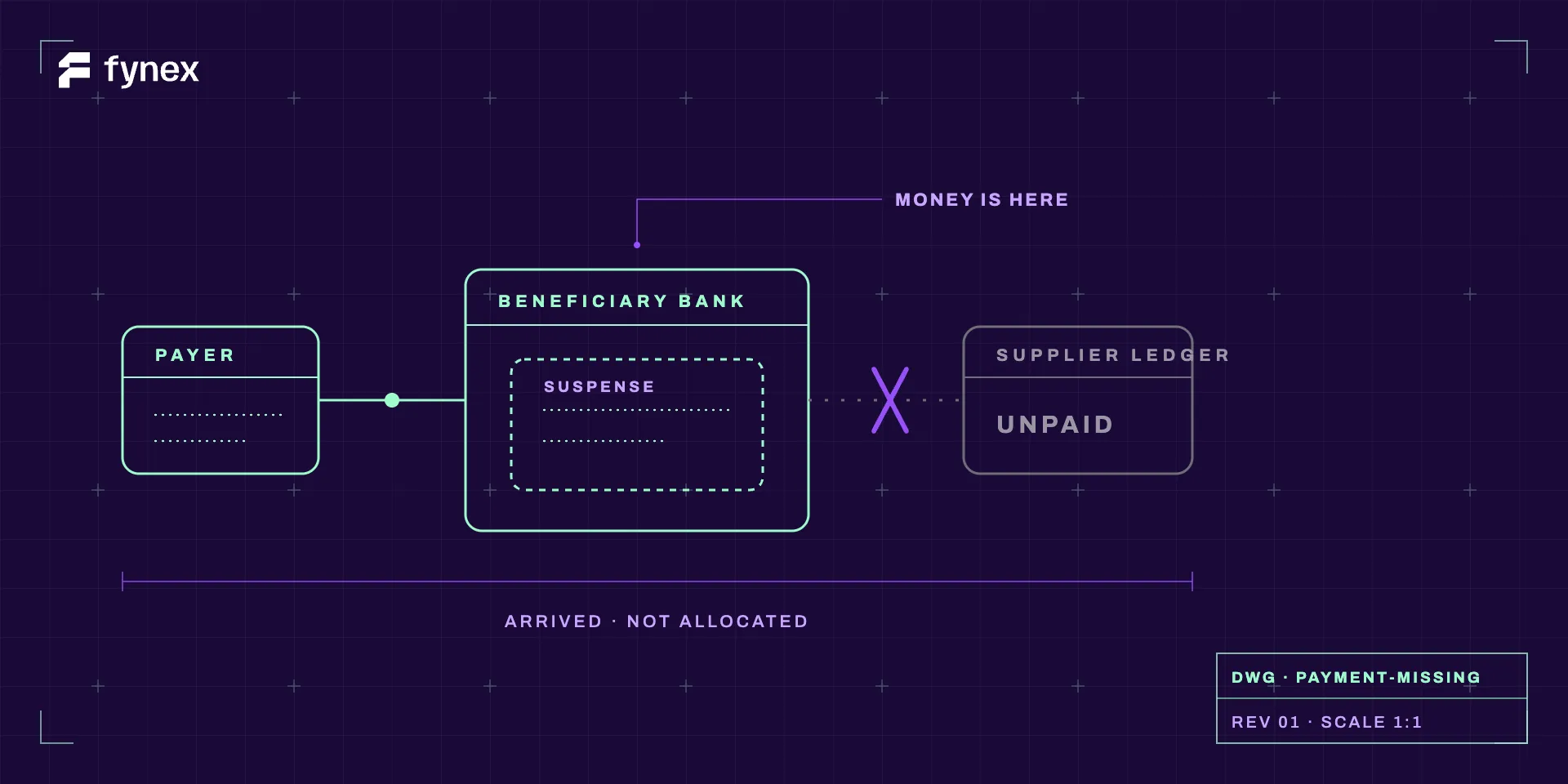
You paid. They say it never arrived. Where B2B payments actually go missing
The money left your account and the supplier has no record of it. In nearly every case it is sitting at their bank, not lost. How to find it, in the right order.
Read more →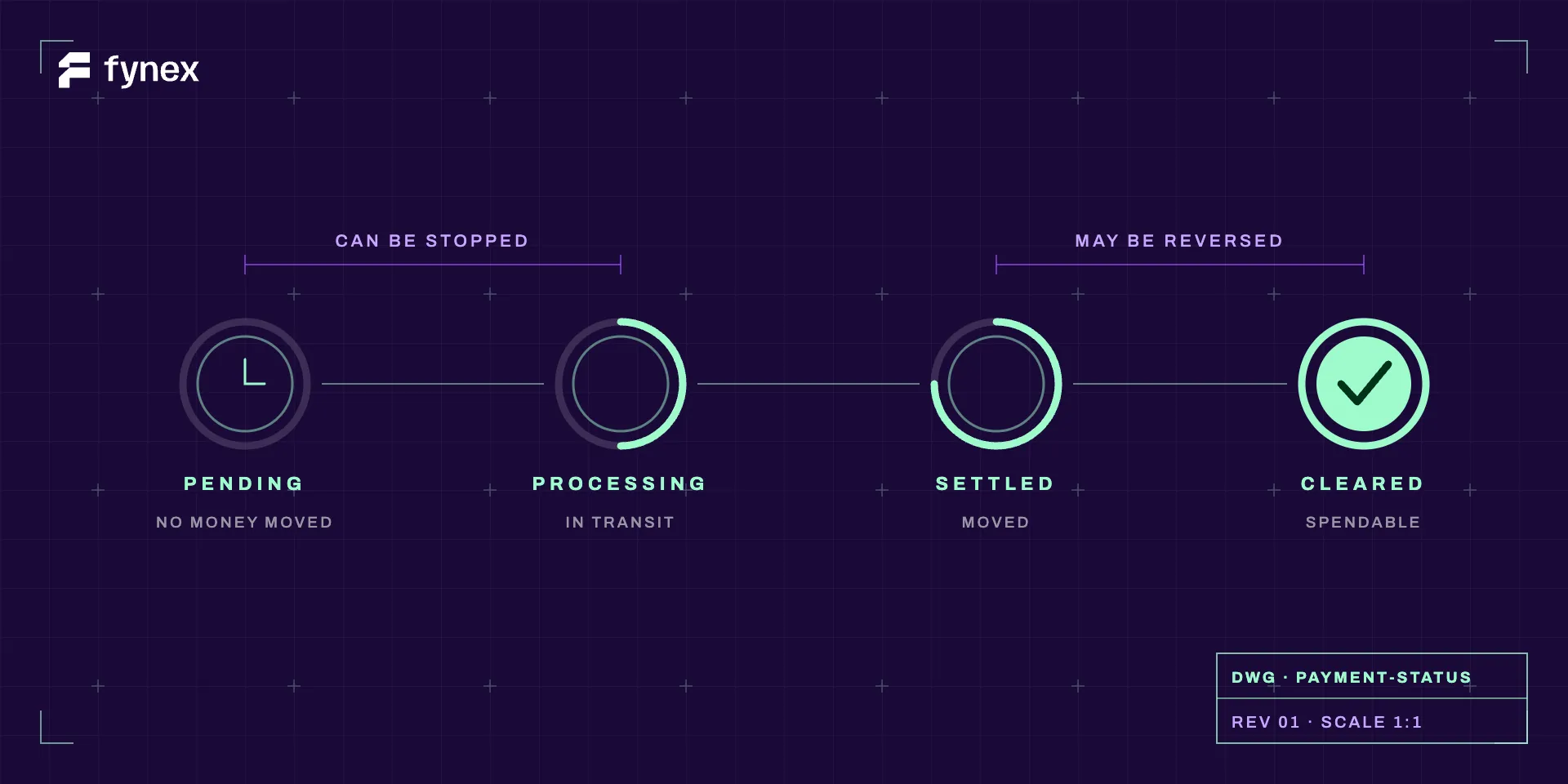
Pending, processing, settled, cleared: what each payment status actually means
Four words that get used interchangeably and mean different things. What each status tells you about where your money is, and which ones can still be reversed.
Read more →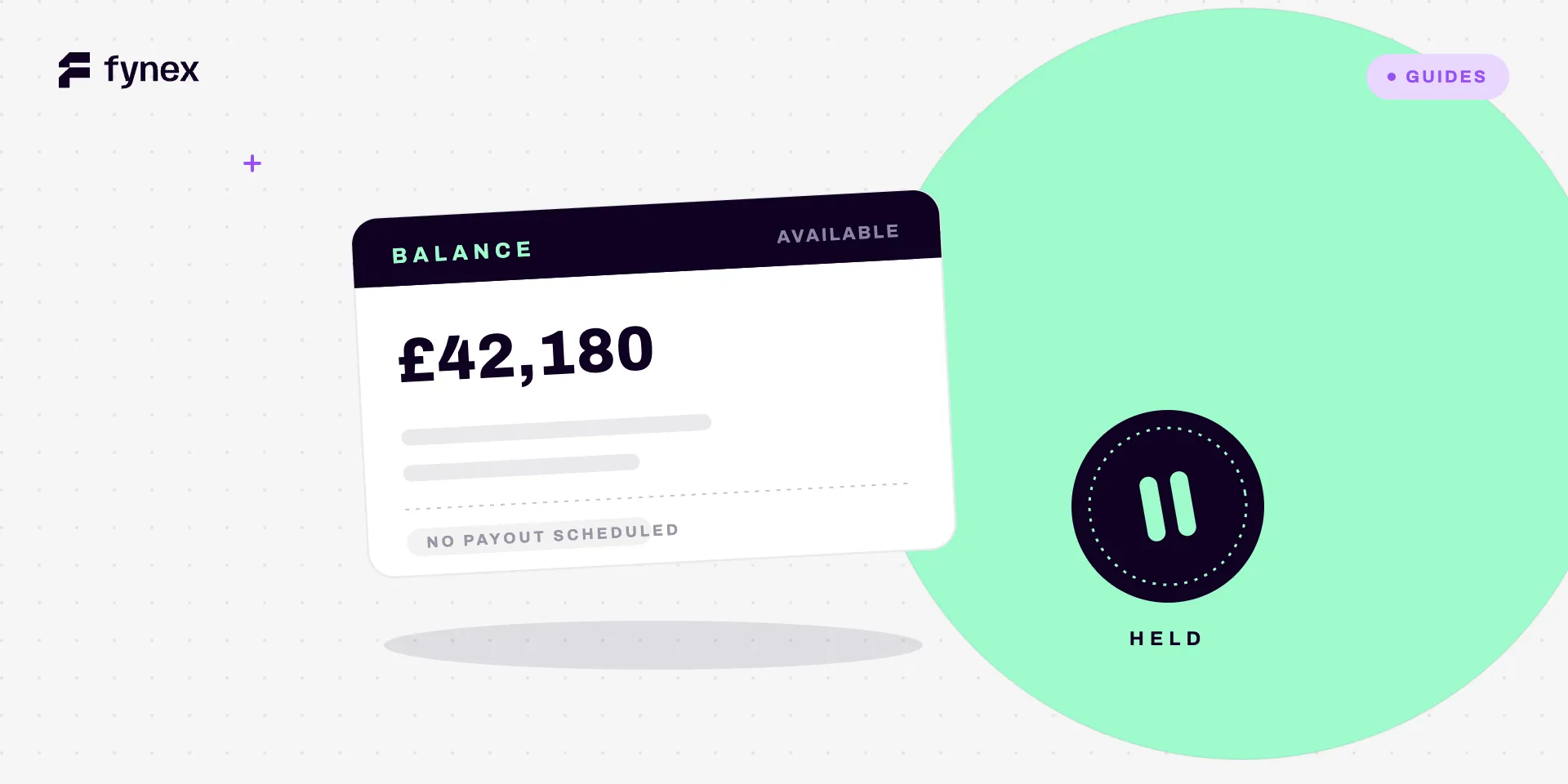
Why is my Stripe payout delayed? The seven reasons, and which one is yours
Stripe shows the balance but the payout hasn't landed. Normal schedule, first-payout delay, extended schedule or a hold — how to tell which one you're in.
Read more →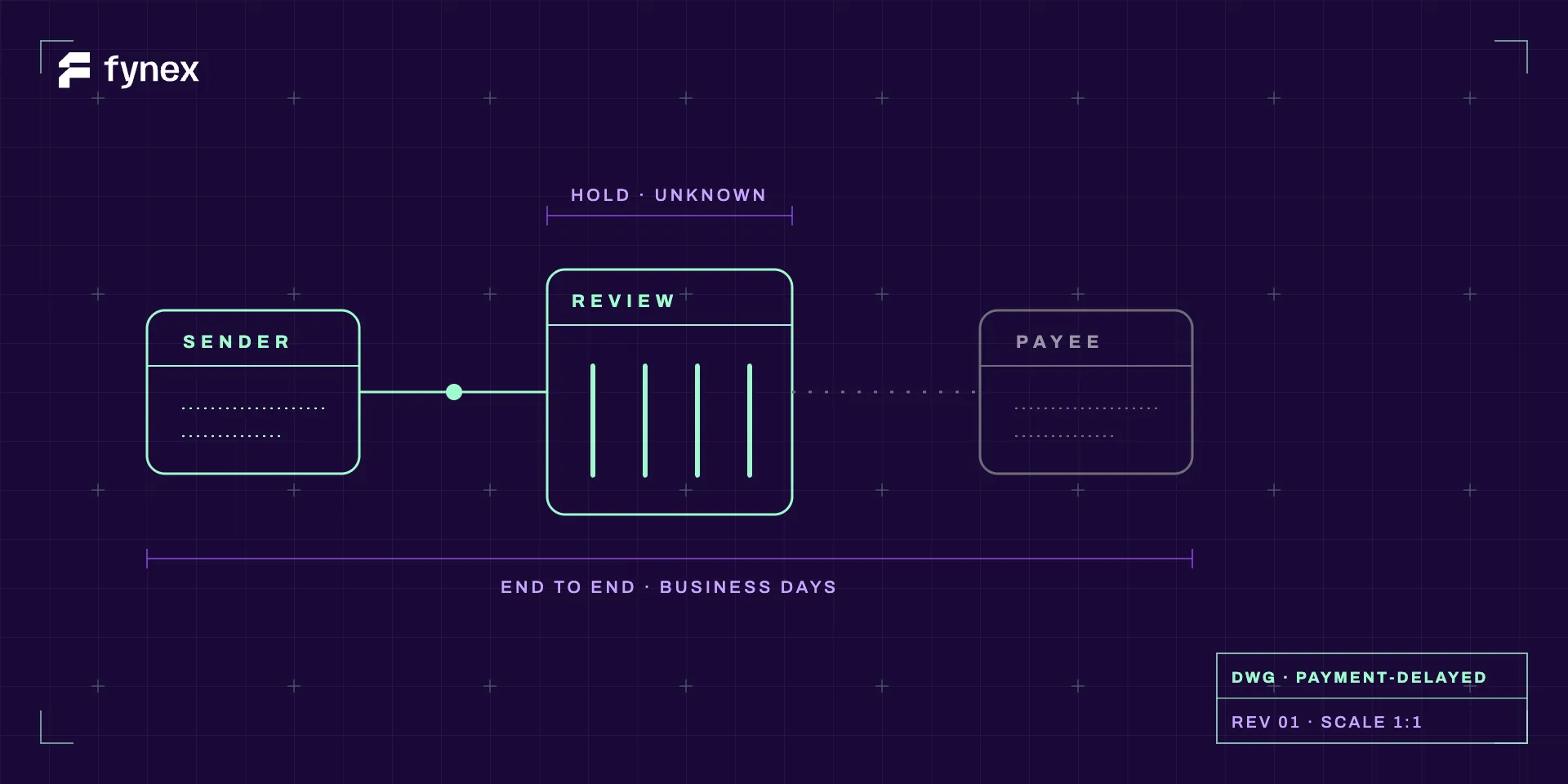
Why is my payment delayed? What's actually happening to your money
A payment you sent is still not there. Here's what each delay actually is — cut-off times, first-payee holds, fraud review, rail choice — and how to tell which one you're in.
Read more →Skyfire vs Adyen for agentic transactions: agent-native rail vs incumbent adding agents
Skyfire's agent-native rail, Fynex governing agent money above both rails, and Adyen's agentic commerce suite: how the three compare for AI-agent payments.
Read more →Airwallex vs Pinch: global financial operations vs AU/NZ collections
Airwallex vs Pinch compared: Airwallex for global accounts, FX and payouts, Fynex for the finance operations above either, Pinch for AU/NZ direct-debit collections.
Read more →MatchMove vs Airwallex: BaaS you build on vs global financial operations
MatchMove vs Airwallex compared: embedded-finance BaaS you build on, Fynex — the layer that runs finance ops across either — and a global financial operating platform.
Read more →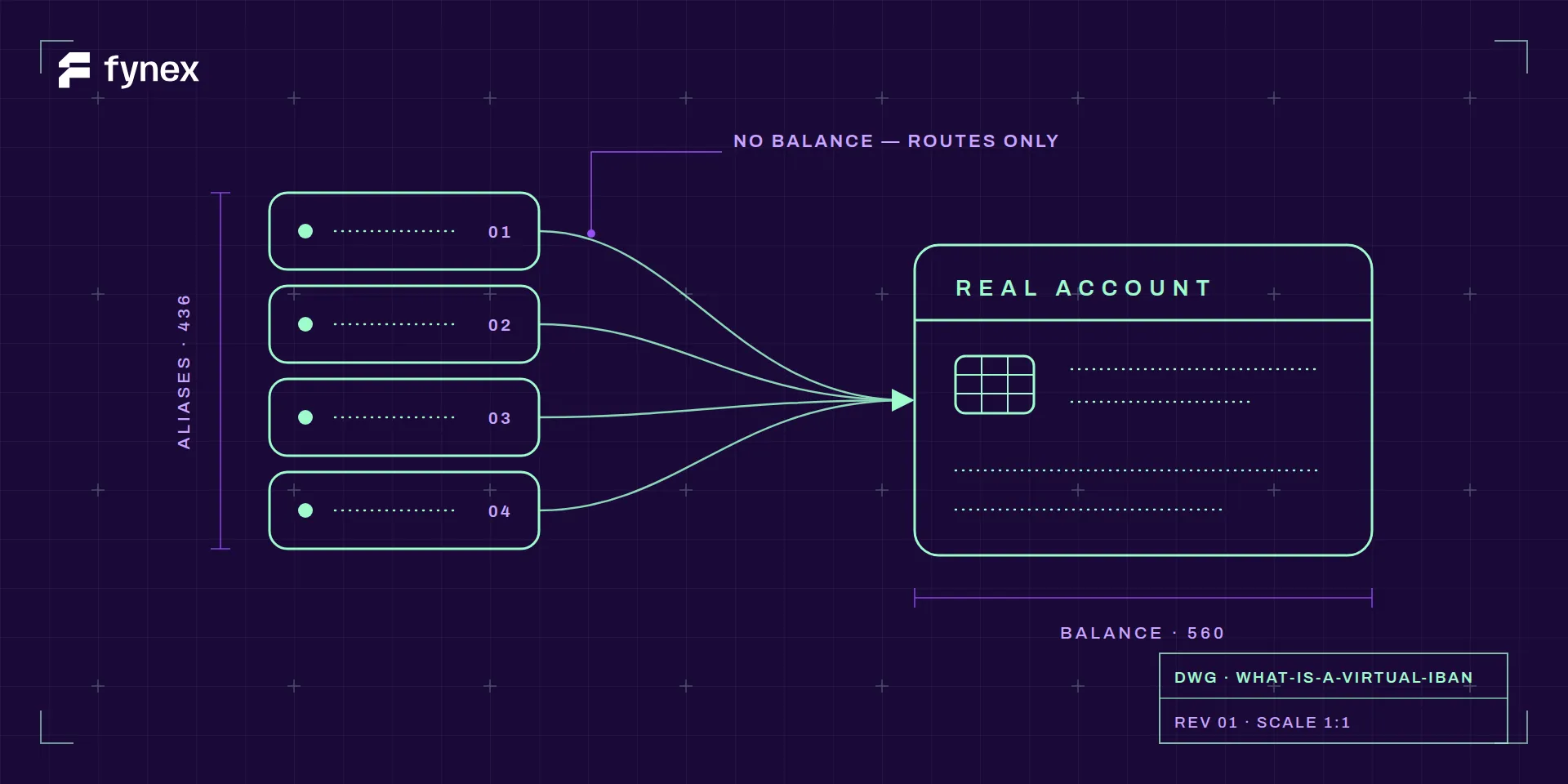
What is a virtual IBAN — and why platforms use them
Virtual IBANs explained: what a vIBAN is, how it differs from a real IBAN, and why marketplaces and platforms use them to identify payers and auto-reconcile incoming payments.
Read more →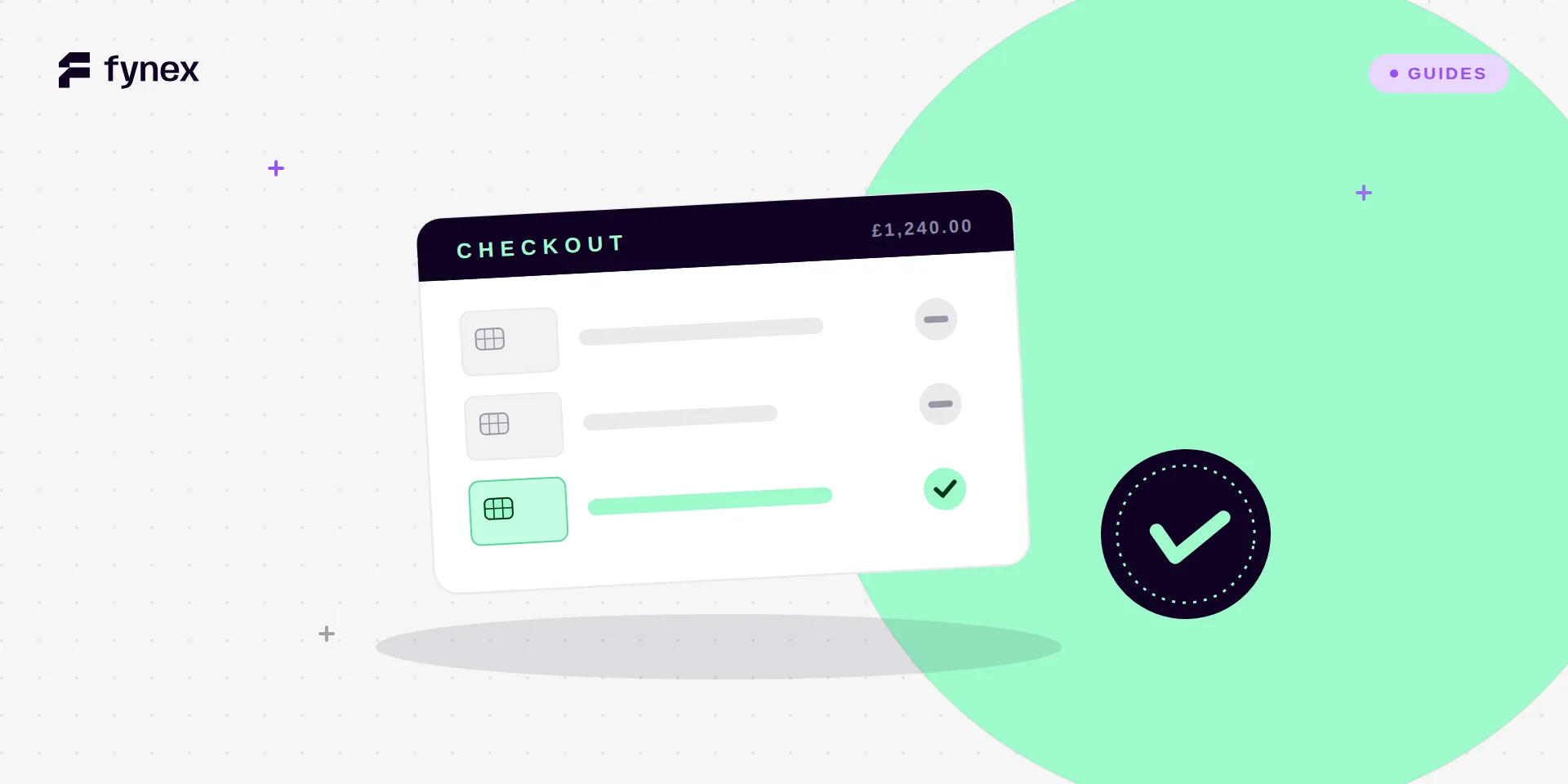
Why did my payment fail at checkout? 7 common reasons
The 7 reasons a payment fails at checkout — billing-address mismatch, fraud flags, limits, expired cards — how to fix each fast, and whether you were charged.
Read more →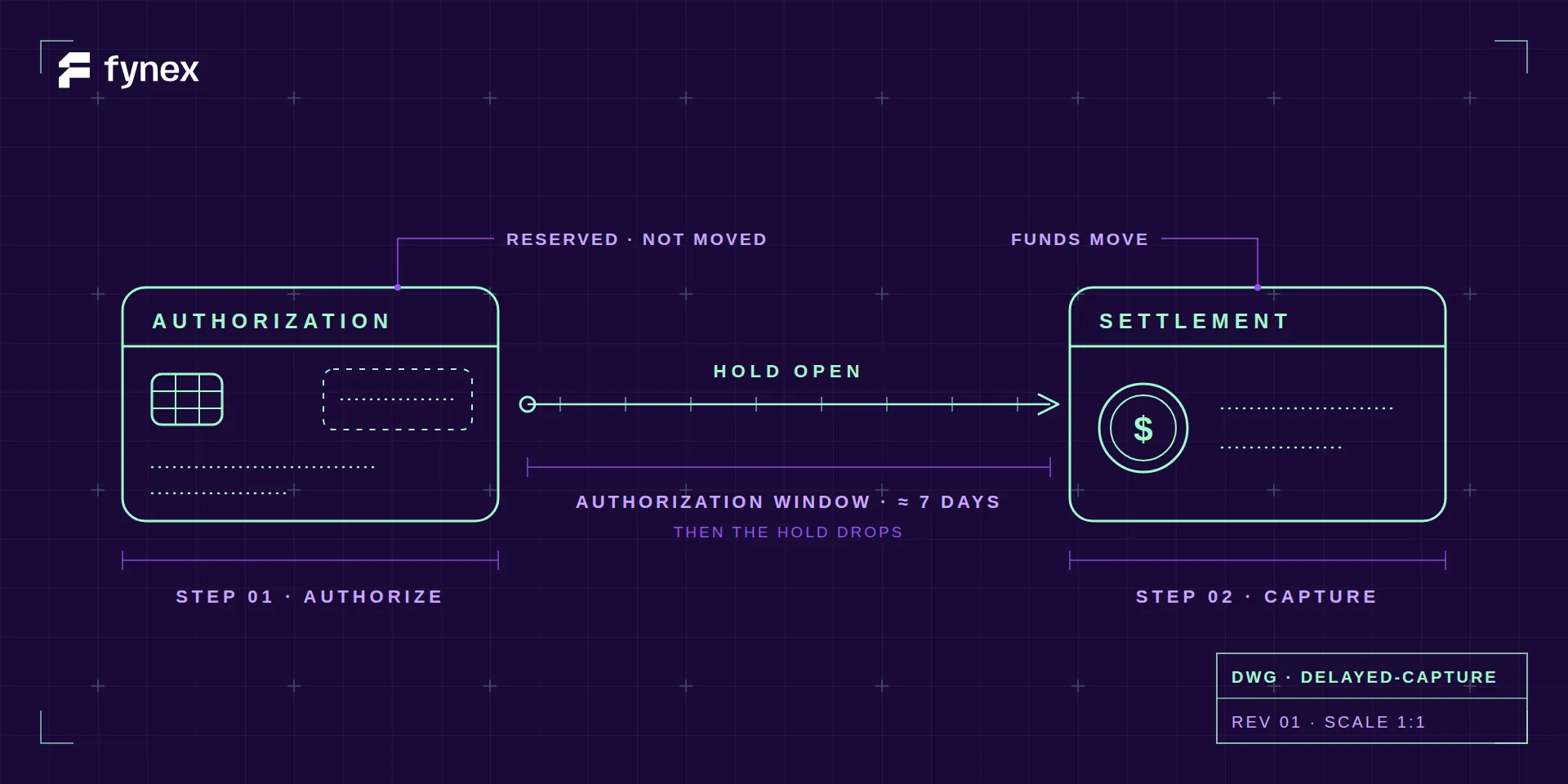
Delayed capture, explained: authorize now, capture later
How delayed capture works: the gap between authorizing a card and capturing the money, how long an authorization hold lasts, and when to use it over escrow.
Read more →
ANEXT vs Airwallex vs Fynex: bank, network, or intelligence?
ANEXT Bank vs Fynex vs Airwallex for Singapore businesses: licensed digital bank, agentic finance layer, and global payments network — which does which job.
Read more →
Getting paid from abroad without losing on FX
Collecting international client payments: local receiving details, billing in the client's currency, and converting on your terms — not per payment on theirs.
Read more →
Is it worth taking card payments for professional services?
Card payments for accountants, consultancies and law firms: when the 1.5–3% fee buys you weeks of cash flow, and when bank transfer or direct debit wins.
Read more →
What a $45k invoice really costs to process
A 1% bank-payment fee turns a $45,000 invoice into a $450 charge. Why percentage pricing punishes invoice businesses, and what to demand instead.
Read more →
Loop vs Airwallex vs Fynex: which cross-border stack fits?
Loop vs Airwallex vs Fynex compared: Canadian multi-currency banking, global payments infrastructure, and the agentic layer that runs the money chain.
Read more →
Stripe vs Fynex: Agentic Finance vs the Payments API
Stripe vs Fynex: Stripe is the payments API you build on; Fynex runs splits, payouts and reconciliation across every rail — the agentic finance layer.
Read more →
Adyen vs Fynex: Enterprise Payments vs Agentic Finance
Adyen vs Fynex compared: enterprise acquiring on Adyen's own rails versus an unconflicted, AI-native finance layer that runs your whole money chain.
Read more →
Wise vs Fynex: Multi-Currency Transfers vs Agentic Payouts
Wise vs Fynex compared. Wise moves currency cheaply on its own rail; Fynex is the agentic finance layer that runs your whole money chain across rails.
Read more →
Airwallex vs Fynex: Global Payments vs Agentic Finance
Airwallex vs Fynex compared. Airwallex gives you global accounts, FX and payouts; Fynex is the agentic finance layer that reasons and runs your money chain.
Read more →
Modern Treasury vs Fynex: Payment Ops, Built or Run for You
Modern Treasury vs Fynex compared: developer-built payment operations and ledgers versus an agentic finance layer that runs multi-rail money movement for you.
Read more →